
Beyond Tree Planting: Managing What You’ve Already Got
- Aug 5, 2025
- 4 min read
When it comes to boosting biodiversity, improving farm resilience, or enhancing landscape beauty, many farmers immediately think of planting new trees. But planting isn’t the only path, or even always the best one. Often, the hidden potential lies right on your farm, in those underused hedgerows, forgotten copses, or neglected field corners. Starting with the assets you already have is a great way to introduce yourself to the role agroforestry has to play in your farm business.
Why Focus on Existing Woody Features?
Not every farm needs more trees. In fact, maintaining and managing the woody features you already have can deliver many of the benefits of new planting, sometimes with less effort, lower cost, and quicker results.
Mature hedgerows and copses are rich ecosystems supporting birds, insects, and mammals. They also act as natural windbreaks, soil stabilizers, and water regulators. When properly managed, these features become even more valuable, enhancing biodiversity and farm productivity.
Practical Ways to Manage What You’ve Got
Hedgerow Restoration
Hedgerows that have been left to overgrow or become patchy can often be restored by careful trimming, clearing out invasive weeds, and encouraging native species to flourish. Restored hedgerows improve habitat connectivity, helping wildlife move safely across farmland (The Hedgerow Alliance, 2021).

Rotational Coppicing
Coppicing — the traditional practice of periodically cutting trees back to stimulate fresh growth — can revitalise overgrown copses. Rotating coppicing over different sections ensures a mix of tree ages and structures, supporting a diverse range of species while producing sustainable wood resources (Forestry Commission, 2019). In fact as you review your farm assets you may see where bygone generations have in fact previously coppiced areas. Hazel, ash and willow can all be used as animal forage but can also be used for firewood, compost, bean poles and fence posts. See our historic copiced hazel in a hedge.

Gapping Up Old Boundaries
Where gaps have appeared in field boundaries or hedges, simply filling these with new native shrubs or small trees can strengthen the habitat and provide shelter corridors. This “gapping up” doesn’t require planting an entirely new hedge, just thoughtful patching (Natural England, 2020). This can be completed fairly cheaply and with relative instant impact through the use of bareroot 1+2 trees which are normally delivered to you between a height of 1 – 2 metres.
Woodland Grazing
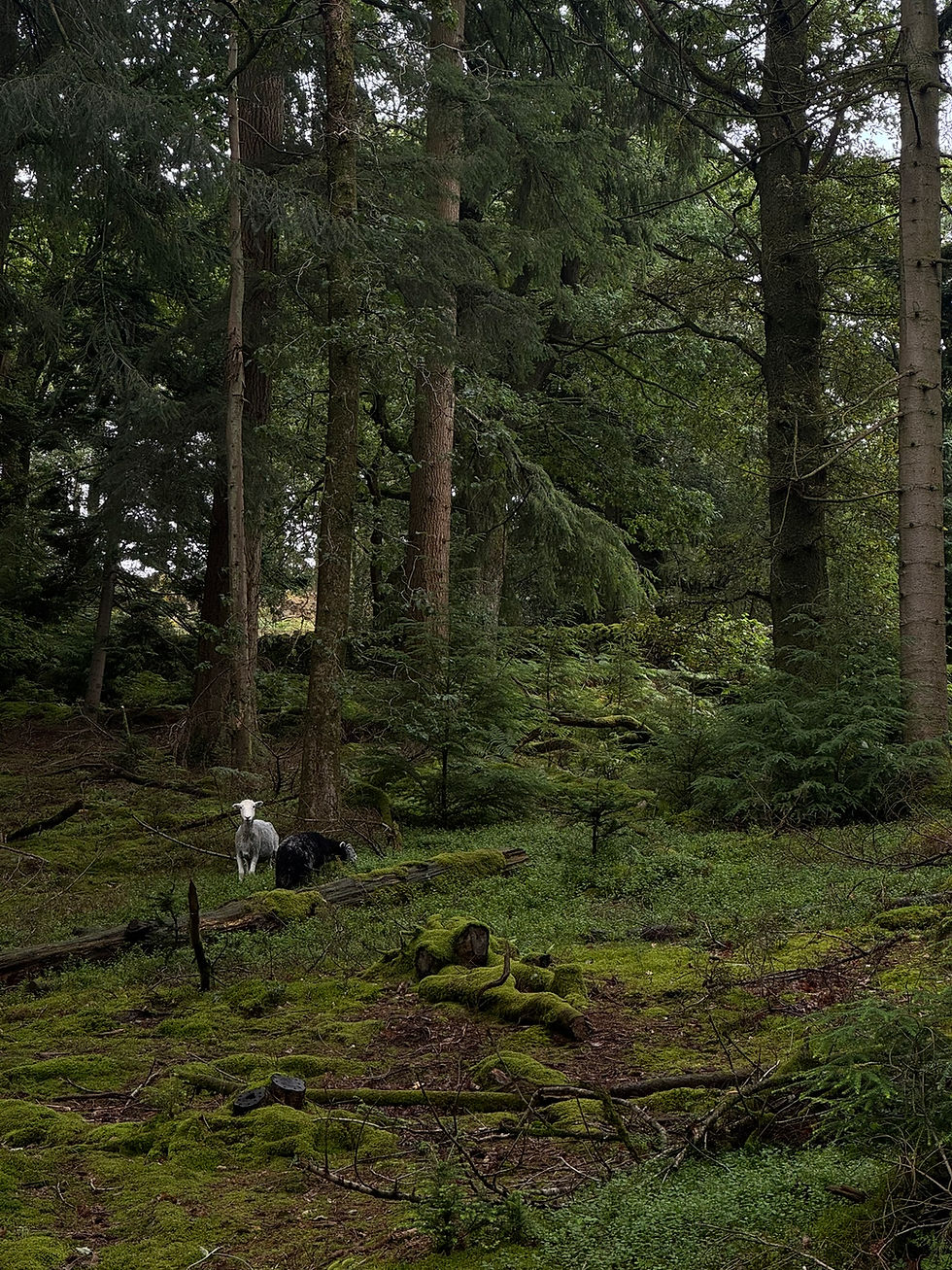
Introducing controlled grazing by livestock such as cattle, sheep, or ponies into woodland areas can help maintain open understory conditions and promote plant diversity. Grazing reduces bramble and scrub overgrowth, encourages wildflowers, and benefits invertebrates and birds that thrive in more open woodland habitats (Woodland Trust, 2022). But also offer an area within your farm rotation to offer alternative grazing areas and to rest fields allowing supporting wider soil management plans and the increase in grazing pallet.

Light Thinning of Dense Woodland
Dense, unmanaged woodland can sometimes limit light reaching the ground, suppressing understory plants and reducing biodiversity and reduce the grazing pallett. Light thinning, selectively removing some trees, allows more light to penetrate, encouraging a richer ground flora and improving habitat variety. This approach balances woodland structure and enhances ecosystem health (Forestry Commission, 2019). Not only that the wood felled can be used for yourself as firewood and be sold to a local sawmill depending on the timber quality and type.

Low-Cost Improvements That Count
One of the biggest advantages of managing existing woody features is cost. These approaches often require less investment than planting large numbers of new trees. Plus, many restoration and management actions qualify for agri-environment schemes and grants designed to reward biodiversity-friendly farming (Countryside Stewardship, 2023).
By focusing on what’s already growing, farmers can:
Enhance biodiversity with minimal disruption
Improve soil and water quality naturally
Reduce wind erosion and crop damage
Maintain cultural and landscape heritage
Access funding and support for stewardship
Final Thoughts
Planting trees can be exciting and valuable, but it’s not the only way to improve your farm’s health. We recognise it can also be daunting with so much information already published and our understanding of the benefits improving each year, it’s a lot.
Sometimes, the first move is to look closely at the hedgerows, copses and woodland you already own, and give them the attention they deserve. Managing existing woody features can yield rich rewards for nature and farming alike, with less hassle and cost than starting from scratch.
Who Can Help You?
If you’re not sure where to start, here are some places and people who can give advice:
Local Farm Advisers or Agricultural Consultants – They know your land and can recommend the best management plans.
Conservation Groups like The Hedgerow Alliance or Woodland Trust – They often provide free guides and support.
Government Schemes and Agri-environment Officers – They can explain how to get funding and help with plans.


Comments